Overground walking
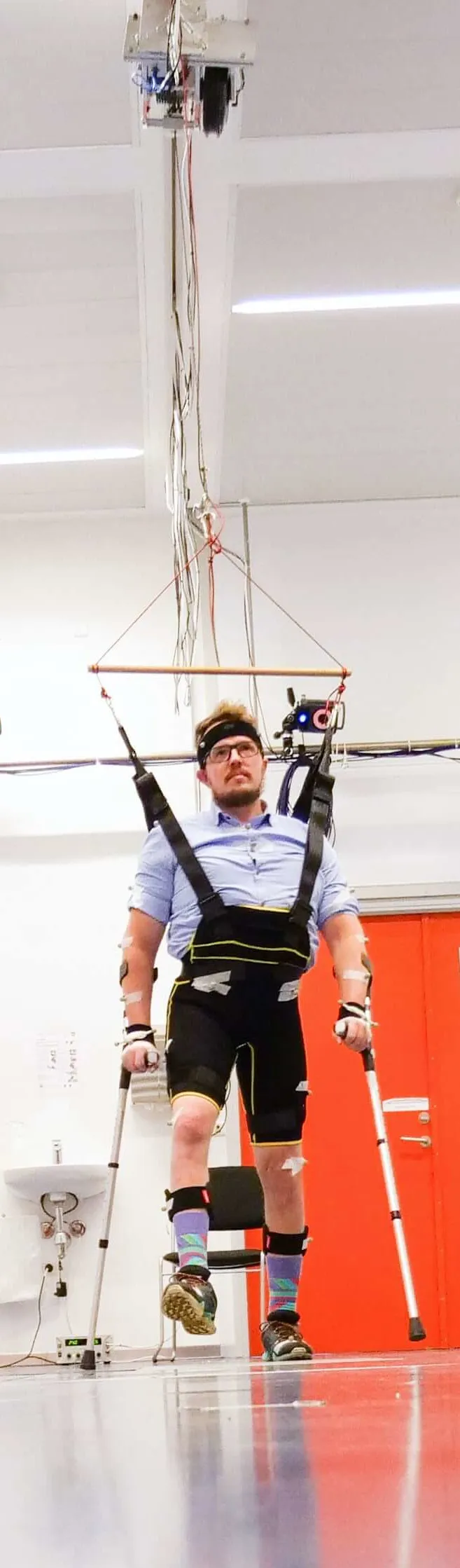
Ceiling rail
Weight relief that follows the user along a ceiling track.
RoboTrainer · affordable rehabilitation robotics
A cable-drive weight-unloading robot that lets stroke survivors, neurological patients and deconditioned wheelchair users keep training — at a fraction of the cost of today’s hospital systems.
The problem
€100,000–€200,000
Typical price of rehabilitation robotics today
At that price, rehabilitation robots stay locked inside elite hospitals.
Stroke survivors, neurological patients and deconditioned wheelchair users past the acute window are routinely written off as “chronic” and stop receiving meaningful therapy. Millions decline avoidably.
The RoboTrainer solution
RoboTrainer supports the user against gravity during walking and therapeutic exercise. It can be operated by therapists, helpers or family members — in clinics, care homes, and eventually at home.
Overground walking
Weight relief that follows the user along a ceiling track.
Treadmill training
Stationary mount above a treadmill for high training volume.
Strength therapy
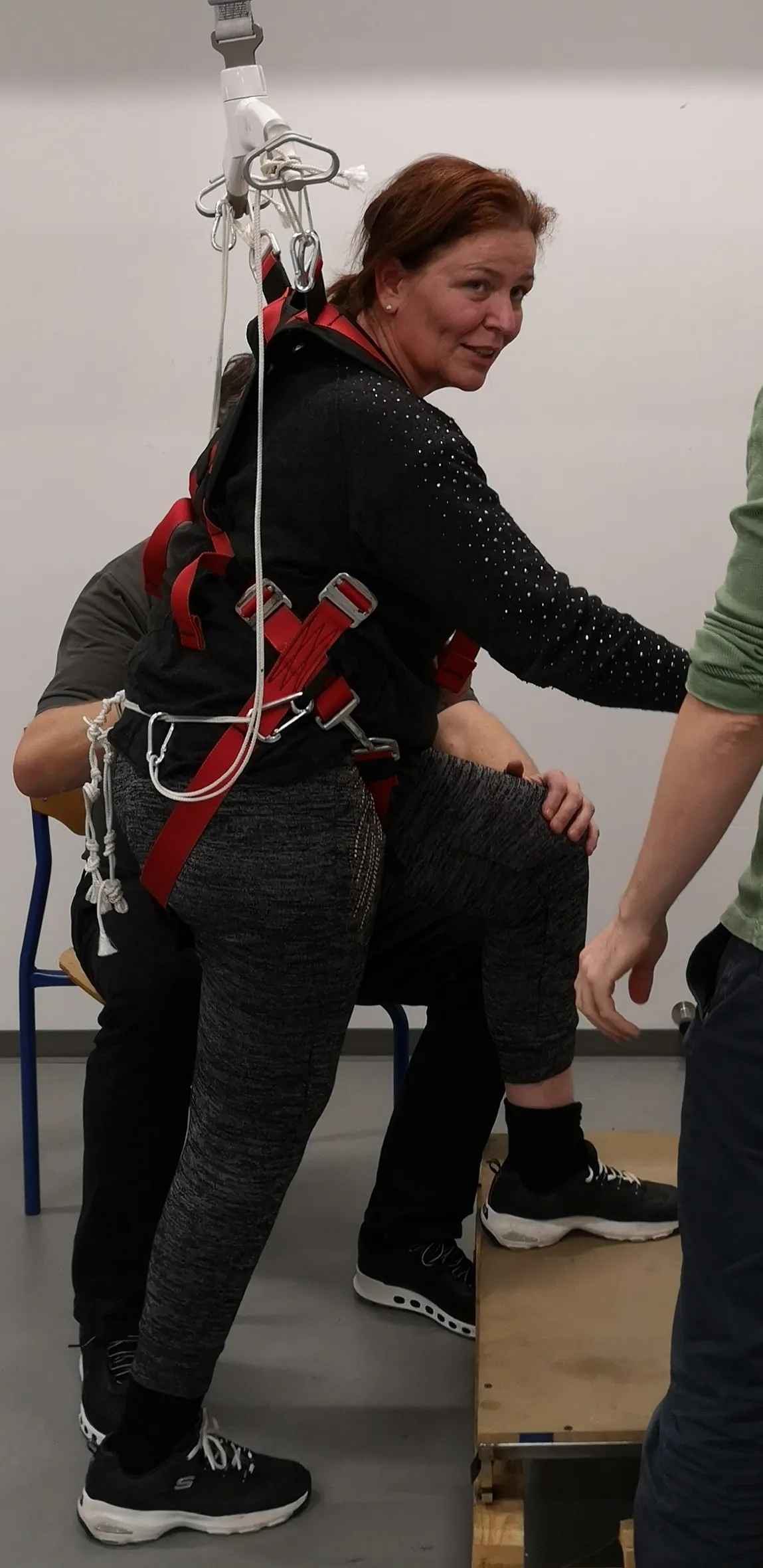
Pulley-redirected resistance for sit-to-stand, squats and strength work.
Designed for users with 10–20% residual muscle strength.
Real outcomes
A documented Danish case — and an independent user’s eight-month echo.
Case · Tina
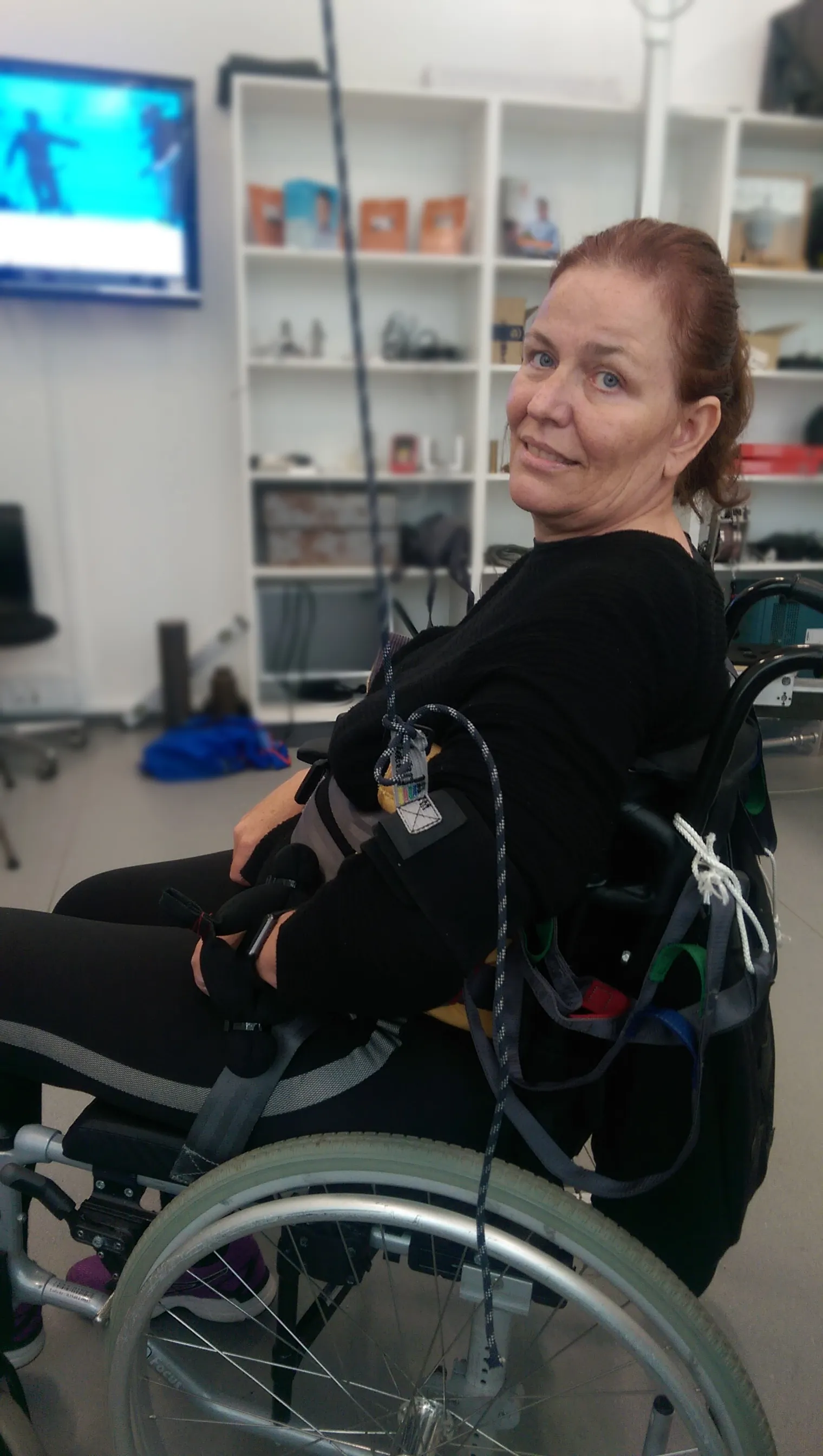
Tina — an office worker and mother — suffered a cerebral haemorrhage with one-sided paralysis. Over two years she trained intensively across Denmark’s leading rehabilitation centres without leaving her wheelchair. The public system then discharged her: “no potential for further rehabilitation.” The family installed a stair lift and arranged help for every daily task.
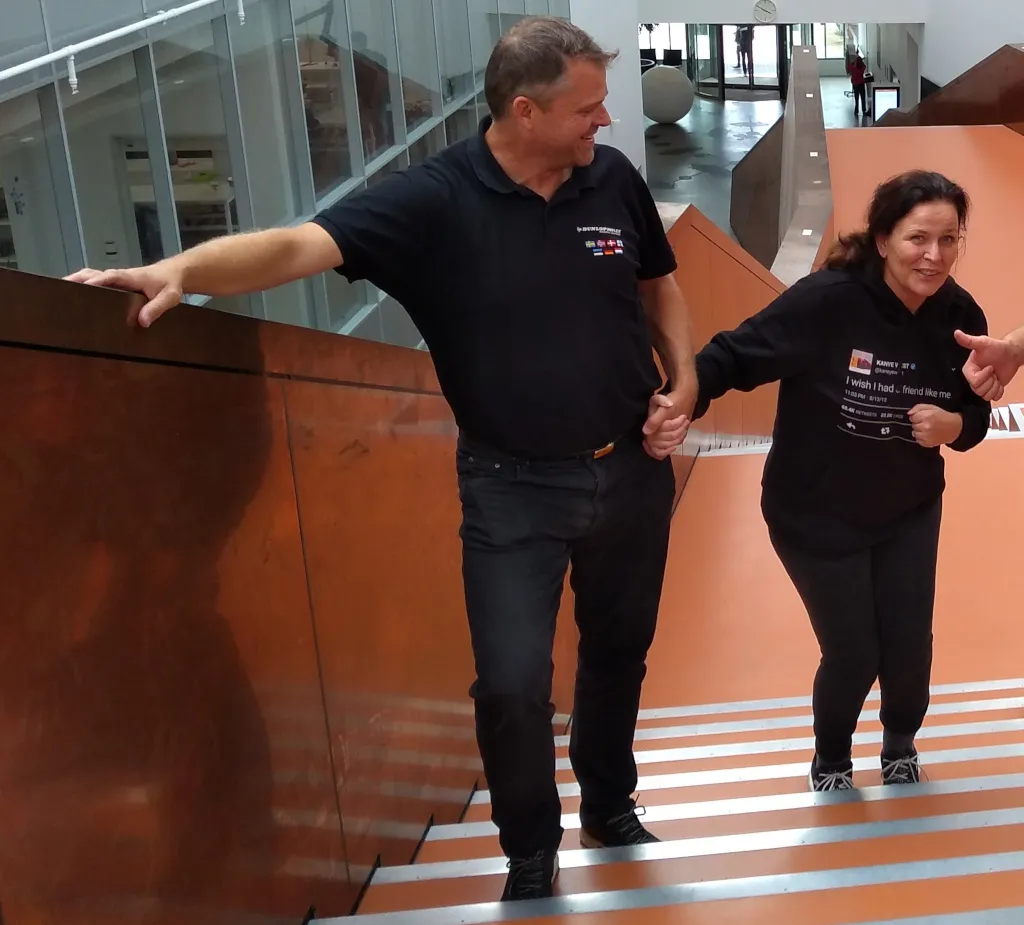
She joined a body-weight unloading trial at the University of Southern Denmark — 90 minutes, three times weekly, for four months, initially supported with 25–60% of her weight. By the end of the trial she stood independently, bore her own weight, and climbed stairs. She transitioned to conventional training without unloading.
Today Tina walks with a cane. She gets in and out of bed, uses the bathroom, dresses, and lives her day independently — the freedoms her rehabilitation team had written off.
Case · Jonas
A wheelchair user deconditioned after an extended passive period, training twice weekly — intermittently — on treadmill walking, sit-to-stand and squats. Walking distance fourfold, speed doubled.
“Treadmill walking with unloading improve my condition! Eight months ago I struggled to walk 700m, Today I walked three kilometres. The technology that made the difference costs one-fifth of the alternatives.”
Scientific foundation
More than nine years of continuous research, from foundational robotics to an ongoing randomized clinical trial.
Robot-assisted vs. standard training in subacute ischemic stroke (RoboRehab).
Acute effects of body-weight unloading on overground walking.
Sit-to-stand and stair-walking with dynamic body-weight unloading.
Therapist-robot collaboration in gait rehabilitation.
Design goals for end-user development of robot-assisted training.
Low-cost modular robotic system for neurological rehabilitative training.
RoBody interaction: kinesthetic HRI.
Team
Engineering from the University of Southern Denmark’s robotics institute, shaped from day one by the people who train on it.
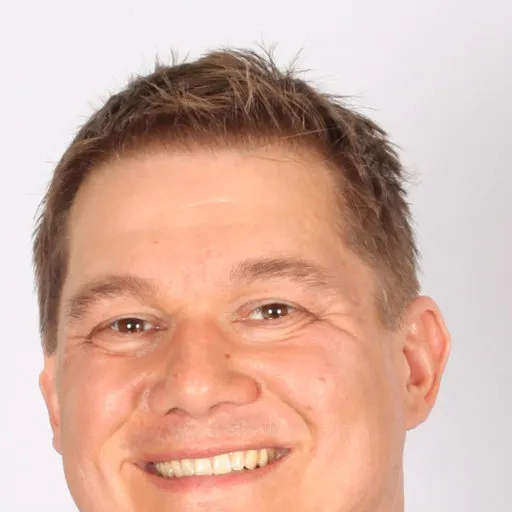
Founder · Inventor of RoboTrainer
Associate Professor, The Maersk Mc-Kinney Moller Institute, University of Southern Denmark
Anders trained as a shipbuilder at Lindø and started his career building welding robots at Odense Steel Shipyard, followed by robotics spin-outs within the Maersk group.
At SDU he holds a PhD and an MSc in Electronic Engineering, and has developed rehabilitation robotics since the first RoboTrainer prototype in 2011 — co-authoring the trial, biomechanics and clinical-integration studies above.
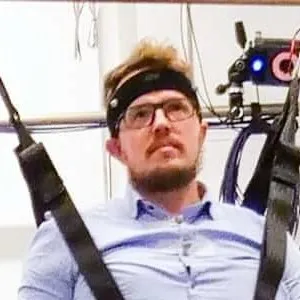
User ambassador
Independent RoboTrainer user — from 700 m to 3 km of walking in eight months. Demonstrates the system at events and site visits.
Placeholder
To be announced
TODO: CEO / commercial co-founder — sales to municipalities, clinics and care homes.
Placeholder
To be announced
TODO: neurorehabilitation physician or physiotherapist lead, e.g. from the RoboRehab trial.
Placeholder
To be announced
TODO: EU MDR / CE-marking expertise.
Investment case
Intellectual property
EP 3 936 197
European patent granted June 2025 (EPO · UK · NO · ES).
Economics
4–7× cheaper
Unit price €25,000 and ~€120 per session — viable for community clinics, care homes, LMIC deployment and home use.
Evidence
RCT underway
Randomized clinical trial in subacute stroke, plus biomechanical and clinical-integration studies.
Impact alignment
For investors & partners
To discuss investment, distribution or clinical partnerships, contact the founder directly.